2023年2月7日(火)~9日(木)
「第1回経営支援EXPO @東京ビッグサイト」

SDGs・脱炭素経営・経営管理・人材育成・採用など経営課題を解決するための
製品・サービスが一堂に出展する日本初の総合展
「第1回経営支援EXPO」が東京ビッグサイトにて開催され、
弊社ミラクールの親会社であるシロキコーポレーション株式会社も出展いたします。
遮熱塗料ミラクール・防水シームレス工法/リリーフ工法を展示実演予定ですので、ぜひご来場ください。
会期 : 2023年2月7日(火)~2023年2月9日(木) 3日間
開場時間 : 10:00~17:00
会場 : 東京ビッグサイト南3・4ホール
小間番号 : 西07-09 店舗・施設ゾーン
出展内容(予定):
遮熱塗料「ミラクール」による工場・倉庫・店舗の暑さ対策・節電・品質管理のご提案
駐車場等アスファルト用遮熱塗装(暑さ対策・熱中症予防・轍掘れ防止)
屋根・壁の防水・補強・改修工事「シームレス工法」
新築そっくりに大変身の防水工事、断熱効果、カバー工法二重屋根「リリーフ工法」
その他機能性塗装による工場・倉庫・店舗等の建屋改修、省エネ化のご提案
招待券お持ちの方、または、来場登録お済みの方は無料でご入場いただけます。
詳しくはこちらから
(シロキコーポレーション株式会社・環境ニュース 2023.1.12号)
皆さまのご来場を心よりお待ち申し上げております。

株式会社ミラクールは遮熱塗料の専業メーカーであり、スペシャリスト集団です。
遮熱塗料(高日射反射率塗料)については、専業会社の当社にお気軽にお問合わせください。

先日開催されました第34回日本道路会議にて、
「カーボンニュートラルの実現に向けた太陽光発電舗装の実証試験」
株式会社NIPPO 平田 茉安里様、トヨタ自動車株式会社 鈴木 一省様、株式会社NIPPO 太田 勝也様の
施工太陽光発電舗装に関する論文が奨励賞を受賞されました。
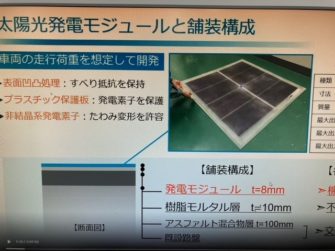
弊社も一連の取り組みのほんの一部ですが関わらせていただいておりますので、
受賞は嬉しい限りです!
20年前は遮熱性舗装が都内中に施工されるとは想像だにしませんでしたが、
遠くない未来の道路には太陽光発電パネルが当たり前になるのかもしれません。

*「太陽光発電舗装」とは、道路に特殊な太陽光発電パネルを敷設し、
分散発電と分散蓄電を通じて通信や照明などに自律した電力を供給するものです。
☆ 株式会社ミラクール ホームページ ☆
株式会社ミラクールは遮熱塗料専業メーカーです。
真面目に愚直に誠実にひたむきに日々取り組んでいます。
https://miracool.idosense.dev/
☆ 施工実績はこちらから ☆
https://miracool.idosense.dev/work/
]]>

脳みそ活性化☆クイズバラエティ
「クイズ!脳ベルSHOW」
今年2月1日に遮熱塗料「ミラクール」問題を出題していただいたのですが、
その再放送日程が決まりました!
<再放送予定日時>
2021年8月30日(月)
フジテレビ地上波(関東地区のみ)
早朝AM4:00~AM4:55
フジテレビサイト「クイズ!脳ベルSHOW」
https://www.fujitv.co.jp/b_hp/nobelshow/

「2005年に発売され、
建物に塗るだけで遮熱効果のある暑さ対策用の塗料、商品名は 『ミ』 ほにゃらら。
『?』に入る商品名はなんでしょうか??」
答えは「ミラクール」

番組内で、
司会の岡田圭右さんと川野アナウンサーがうまく盛り上げてくださったのが印象的でした。
そして個性豊かなゲストパネラーの皆様との掛け合いがなんとも楽しい!
(この日は五十音順で、沢田みなみさん・なべおさみさん・みんなのれっずさん・山口かおるさんでした)
月曜日の早朝なのでかなりの早起きになりますが・・・
良かったら是非ご覧ください!
☆ クイズ!脳ベルSHOWオフィシャルサイト ☆
https://www.bsfuji.tv/noubellshow/
]]>

令和3年度(2021)遮熱塗装向け・一般リフォーム向け 補助・助成情報です。
お調べできた範囲での掲載になります。
下記リンクをクリックの上、ご確認下さい。
各自治体によって助成の要件は異なっていますので、
申請をお考え
1. 令和3年度 東京都23区 遮熱塗装向け 補助・助成制度一覧
千代田区、港区、中央区、新宿区、台東区、墨田区、江東区、品川区、世田谷区、北区、足立区、葛飾区、杉並区
2. 令和3年度 東京都下 遮熱塗装向け 補助・助成制度一覧
狛江市、福生市、国立市、武蔵村山市、羽村市
3. 令和3年度 東京都23区・東京都下 一般リフォーム向け 補助・助成制度一覧
北区、目黒区、大田区、渋谷区、豊島区
東大和市、西多摩郡日の出町、稲城市、あきる野市
4. 令和3年度 他都市 遮熱塗装向け・一般リフォーム向け 補助・助成制度一覧
秋田県大仙市、新潟県柏崎市、
埼玉県、埼玉県さいたま市・埼玉県上尾市・埼玉県本庄市・埼玉県羽生市
栃木県宇都宮市、群馬県渋川市、群馬県高崎市、群馬県前橋市、長野県大村市
愛知県新城市、愛知県扶桑町、京都府京都市、
大阪府摂津市、大阪府泉佐野市、滋賀県大津市、広島県府中町
福岡県、長崎県諫早市、長崎県彼杵郡波佐見町
※ここに掲載をされているもの以外にも助成金がある可能性がございます。

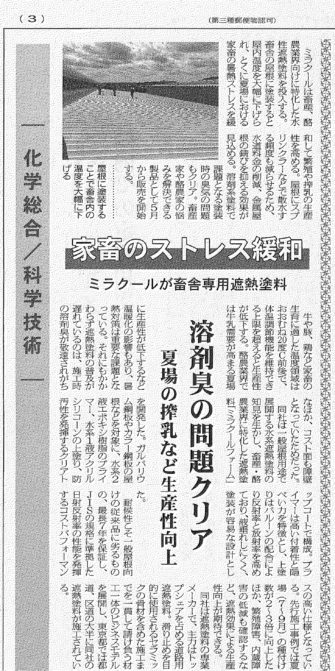
ミラクールで5月より発売する新製品「ミラクールファーム」が「化学工業日報」の紙面で取り上げられました。
商品詳細はこちらです。
酪農農家様、畜舎様等に向け、動物にも環境にも優しい塗料の開発を致しました。


畜産・酪農家向けの遮熱塗料「ミラクールファーム」を発売
〜遮熱塗料で 牛・豚・鶏などの育成環境が改善できます 〜
株式会社ミラクール(本社:東京都千代田区、代表取締役:堀智彦)は、畜産・酪農家向けの遮熱塗料「ミラクールファーム」を2021年5月10日(月)より発売いたします。
【URL】https://miracool.idosense.dev/
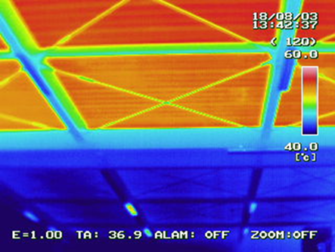
サーモカメラによる畜舎の天井写真
(手前が未塗装部分、奥側がミラクールファーム塗装部分)
ミラクールファームの3つの特徴
1.畜舎内の暑熱ストレスの低減(室温が大幅に下がります)
2.オール水系で臭いの心配なし(塗装工事中に臭いません)
3.抜群のコストパフォーマンス(高耐久かつリーズナブル)

ミラクールファーム誕生の背景
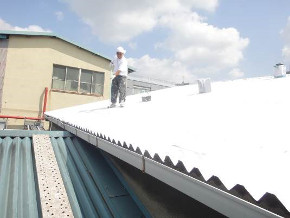
遮熱塗料は住宅、工場、倉庫などの建物に多数採用されてきました。
一方、畜産・酪農用の畜舎に対しては、価格の問題、臭いの問題、耐久性の問題から広く普及していませんでした。そこで、株式会社ミラクールはそれらの課題を克服した製品を開発し発売を開始いたします。
ミラクールファームの使い方・利用シーン
家畜が活発に活動できる気温(適温域)は、概ね20℃前後と言われています。しかし、体温調節機能が維持できる上限の気温(臨界温度)を超えると夏バテしてしまい、家畜の生産性は大きく低下します。ミラクールファームは家畜の暑熱ストレスを和らげ、今まで夏場に生じていたロスを未然に防ぐことをサポートします。
販売方法:材工による責任施工
販売店:当社の特約代理店
【お客様からのお問い合わせ先】
営業部:佐藤、大久保
e-mail:info@miracool.idosense.dev
]]>
BSフジ「クイズ!脳ベルSHOW」にて、遮熱塗料「ミラクール」を出題していただきました!
(第1119回・2021年2月1日(月)22:00~22:45放送分)
問題は「クイズ!脳みそフル回転」というコーナーでのパネルの中にある、
「おもしろ商品名」としての出題でした。
「2005年に発売され、
建物に塗るだけで遮熱効果のある暑さ対策用の塗料、商品名は 『ミ』 ほにゃらら。
『?』に入る商品名はなんでしょうか??」
答えは「ミラクール」
番組内で、
司会の岡田圭右さんと川野アナウンサーがうまく盛り上げてくださったのが印象的でした。
そして個性豊かなゲストパネラーの皆様との掛け合いがなんとも楽しい!
(この日は五十音順で、沢田みなみさん・なべおさみさん・みんなのれっずさん・山口かおるさんでした)
弊社の会社名であり、今まで大切にしてきたブランド名をこのように取り上げていただき
ありがとうございました!番組制作に関わったすべての皆様にお礼を申し上げます。
番組内で紹介していただいたように、
名前の由来は
Mirror(ミラー)のように
Miracle(奇跡)的に
Cool(涼しい)
となります。
社内公募をし、50個ほど集まった中から、満場一致で決まった名前です。
これからも名前負けしないように社員一同精進し、このブランドを育てて参ります。
☆ クイズ!脳ベルSHOWオフィシャルサイト ☆
https://www.bsfuji.tv/noubellshow/
]]>



令和2年度 東京都都下、東京都以外 遮熱塗装助成金情報
東京都下、東京都以外での今年度の遮熱塗装への助成金情報です。
お調べできた範囲での掲載になります。
下記リンクをクリックの上、ご確認下さい。
各自治体によって助成の要件は異なっていますので、
申請をお考え
千代田区、港区、中央区、新宿区、台東区、墨田区、江東区、品川区、世田谷区、北区、足立区、葛飾区、杉並区
狛江市、福生市、東大和市
秋田県大仙市、新潟県柏崎市、埼玉県、埼玉県さいたま市、埼玉県上尾市、埼玉県本庄市、長野県大町市、愛知県新城市、愛知県扶桑町、京都府京都市、大阪府茨木市、福岡県、長崎県諫早市、長崎県彼杵郡波佐見町
※ここに掲載をされているもの以外にも助成金がある可能性がございます。
]]>Berkeley Lab’s Top 10 Science Stories of 2019

ローレンスバークレー国立研究所は米国エネルギー省のためにカリフォルニア大学が管理する国立研究所で、1931年に設立されてから、ローレンスバークレー国立研究所とその科学者は13のノーベル賞を受賞しています。
下記の全文の冒頭部分を要約すると、下記のような内容になっています。
「今夏だけで熱波によって日本では11名の死者を出し、フランスでは過去最高の45.9℃とう暑さを記録し、米国東海岸では1億4,700万人に熱波に関する警告が出されました。
この 「新たな正常」と推測される極端な気温は、私たちの体を温め、日射病や臓器損傷さえ引き起こす可能性があります。
彼らの研究「将来の極端な熱環境による気候変動、人口動態、およびヒートアイランド現象緩和の相互作用の影響」は、最近「Environmental Research Letters誌」に掲載されました。
研究者たちは今世紀半ばには熱波の襲来が現在の2-10倍に増えると予測していますが、カリフォルニア州の人口密集地域の全ての建物の屋根に遮熱塗料を塗装することによって、熱波による影響を受ける回数を8,500万回から3,500万回に減らせると試算しています。
これは、都市の熱を緩和し、エアコンの使用量を減らし、節水するための高日射反射率の屋根、壁、舗装の可能性に関するバークレーラボの最新の研究例です。
Cool Roofs Can Help Shield California’s Cities Against Heat Waves
New Berkeley Lab study finds that in reducing air temperatures, cool roofs could protect urbanites from heat waves News Release By Priyanka Runwal • August 14, 2019
This summer alone, intense heat waves have been to blame for at least 11 deaths in Japan, a record-breaking 45.9-degree Celsius temperature in France, and a heat advisory affecting 147 million people on the U.S. East Coast. Conjectured as the “new normal,” these extreme air temperatures can heat our bodies, causing sunstrokes or even organ damage.
A new study by researchers at the Department of Energy’s Lawrence Berkeley National Laboratory (Berkeley Lab) shows that if every building in California sported “cool” roofs by 2050, these roofs would help contribute to protecting urbanites from the consequences of these dangerous heatwaves. Their study, “Interacting implications of climate change, population dynamics, and urban heat mitigation for future exposure to heat extremes,” was recently published in the journal Environmental Research Letters.
The researchers predict that heat waves are likely to become two to 10 times more frequent across the state by mid-century. But if cool roofs were adopted throughout California’s most populous areas – the San Francisco Bay Area, Los Angeles, San Diego, and Sacramento – by 2050 these reflective roofs could bring down heat wave exposures (defined as each time a person experiences a heat wave) by 35 million each year, compared to an estimated 80 million heat wave cases in 2050 with no increase in cool roof adoption. This is the latest example of Berkeley Lab’s research into the potential for reflective roofs, walls, and pavements to mitigate urban heat, reduce air conditioning usage, and save water.
“Urban spaces are a small fraction of the globe, but they are where most people live,” said Pouya Vahmani, a postdoctoral research fellow in Berkeley Lab’s Climate and Ecosystem Sciences Division and lead author of the study. “If we’re able to cool those areas even a little bit, it can have a huge impact on health and roll back significant impacts of climate change.”
Predicting future heat waves
City dwellers are more vulnerable than their rural counterparts to a heat wave’s negative effects. Due to the urban heat island effect, air temperatures spike several degrees higher in cities than in surrounding vegetated areas. Built surfaces readily absorb daytime heat and release it at night, keeping cities warmer overnight as well.
When nighttime temperatures remain elevated, human bodies struggle to cool down and recover from the day’s scorching heat. In summer, when urban heat island effects peak, human health can be severely compromised. Add a heat wave to this already heat-stressed environment, and impacts exacerbate.
In this new study, the Berkeley Lab researchers had two goals. First, they wanted to predict heat wave occurrences across California’s 29 major urban counties between now and 2050. They used regional climate conditions between 2001 and 2015 as a starting point to simulate mid-century climate under two global warming scenarios.
Combining these climate conditions with high-resolution satellite images allowed them to incorporate urban features like buildings, roads, and vegetation, which absorb and release heat, and for more accurate future climate predictions. Then, the researchers used county-level population estimates for 2050 to assess population exposure to future heat waves.
“We wanted to gain a better picture of future climate change risks for California’s urban environments and adaptation options,” said Andrew Jones, a scientist in Berkeley Lab’s Climate and Ecosystem Sciences Division and co-author of the study. “Making such refined and realistic predictions can help urban planners and citizens prepare for heat events in an increasingly warming future.”
Their study found that heat waves with air temperatures exceeding 35 degrees Celsius (95 degrees Fahrenheit) and lasting at least three consecutive days become two to 10 times more frequent under future global warming scenarios. With the added burden of urban centers getting more populous, the researchers expect that by 2050 there will be 80 million heat wave exposure cases in California each year, compared to an average of 37 million cases annually under current climate conditions.
“That’s more than double the cases we’ve seen under current climatic conditions,” Vahmani said.
Also, regions like downtown Los Angeles and Santa Clara, Alameda, and Orange Counties that historically benefited from cool sea breezes will experience more frequent, more intense heat waves by mid-century. “That’s significant,” Vahmani said, “because many of these regions aren’t prepared to deal with the extreme heat.”
Cool roofs to the rescue
Coating roofs white or installing sunlight-reflecting tiles in urban clusters could be one solution, according to the researchers.
“It’s not necessarily a complicated or costly technology,” Vahmani said. “But cool roofs, in general, are more effective if everyone adopts them.”
The second goal of their study was to analyze the effectiveness of cool roofs in mitigating heat wave impacts. To do that, the research team repeated the same high-resolution regional climate simulations, only this time replacing all existing building roofs with cool roofs. Specifically, they wanted to know if the increased solar reflectance might shield urban populations against heat waves. They found that if every building in California sported cool roofs by 2050, it could bring down the annual number of heat wave exposures in California to 45 million from 80 million .
This mitigation potential surprised the team. “Although a small percentage of California’s land is urban, I was surprised at how effective cool roofs could be in pushing back risks of heat extremes,” Jones said.
Alongside reduced exposure to heat waves and associated health risks, this study predicts that widespread adoption of cool roofs could drastically cut energy demands by reducing air conditioning use.
Jones acknowledges that 100% conversion to cool roofs by 2050 may be challenging. While cities like Los Angeles mandate cool roofs for new constructions, retrofitting existing buildings can be expensive.
The team now wants to find the minimum cool roof coverage needed to accrue benefits similar to those reported in the study.
But the positive effect of cool roofs will be limited to reducing day time temperatures when the roofs reflect sunlight. At night, when roads and packed buildings slowly release heat, these roofs aren’t capable of directly providing cooling benefits.
“What they can do is reduce the amount of heat cities absorb during the day,” Jones said, “which can indirectly lower the heat available for release in the night.”
This study was supported by DOE’s Office of Science. Berkeley Lab scientist Christina Patricola was also a co-author of the study.